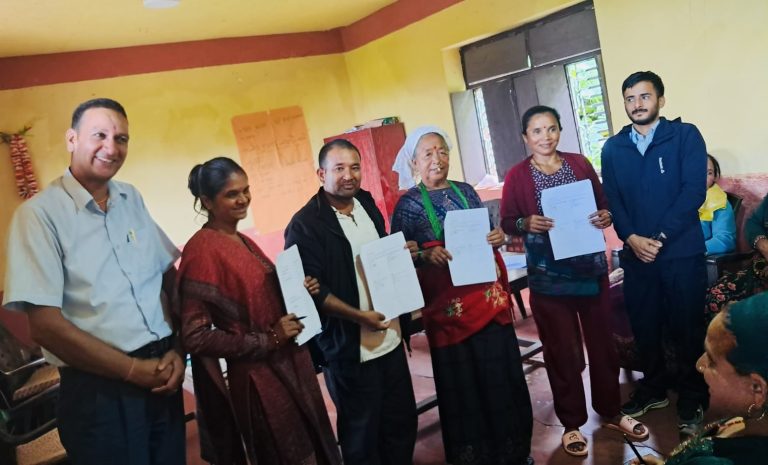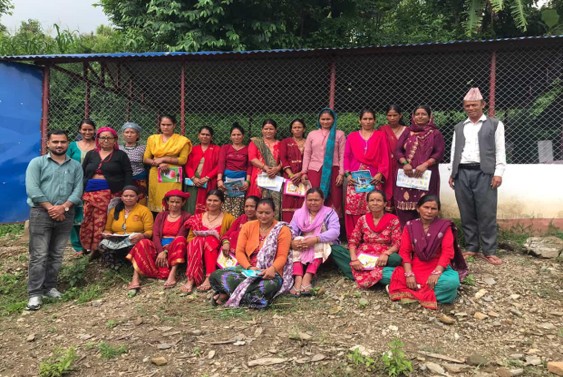
On 1–2 August 2026. a two‑day training on Potato Post‑Harvest Management was held at Gothpatha Cooperative, Ratapani, Narayan Municipality, Dailekh. The training was organized for potato farmers, cooperative members and stakeholders.

The program was organized by Saewcc‑ Nepal under the initiative of the International Labour Organization (ILO) through the European Union–United Nations (EU‑UN) Empowered Women, Prosperous Nepal (EWPN) Program.
The training was led by Dr. Jeet Narayan Chaudhary, Senior Scientist and Mr. Saroj Adhikari, Senior Scientist from the Horticulture Research Station, Dailekh (NARC).
The program aimed to enhance farmers’ knowledge and practical skills in potato harvesting, handling, sorting, grading, curing, storage, packaging, transportation and marketing. The program also focused on identifying causes of post‑harvest losses improving potato quality and marketability promoting collective marketing through the cooperative and strengthening farmers’ understanding of the cost of potato production.
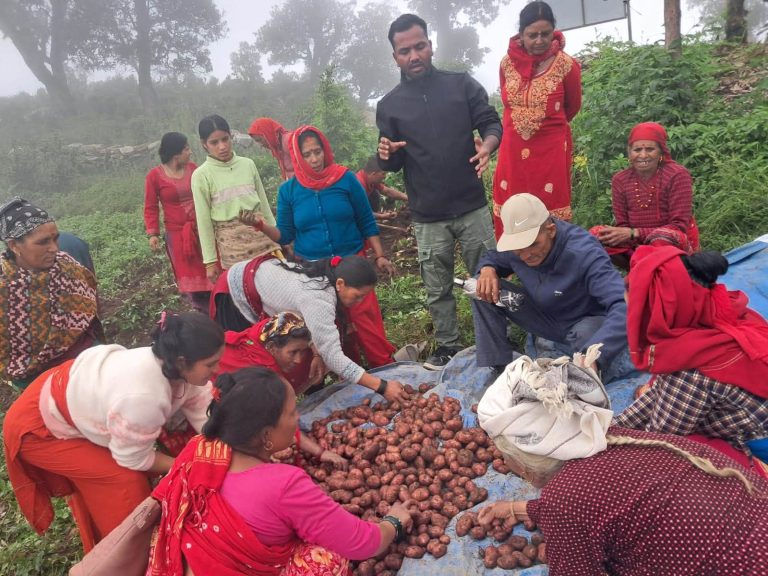
The training was conducted using practical methods. The training included lectures and presentations group discussions question‑and‑answer sessions, farmers’ experience sharing, demonstrations of potato grading and sorting discussions on harvesting and handling techniques, storage management and group work on identifying post‑harvest problems and solutions.

On the day farmers discussed potato maturity and appropriate harvesting practices. The sessions emphasized minimizing injury, careful handling of tubers and separating damaged and diseased potatoes from healthy ones. Farmers also explored causes of post‑harvest losses, such as mechanical damage, poor handling, inadequate sorting and grading excessive moisture, poor ventilation, improper packaging, sprouting and pest damage.
The training also included sessions on curing, cleaning, sorting and grading. Farmers learned how proper curing helps heal wounds and improve storage quality. Potatoes were categorized by size, quality and intended use, including seed potatoes, table potatoes processing‑grade potatoes and damaged or diseased potatoes.
On the day the training focused on potato storage management. The training covered selection of undamaged tubers proper ventilation, protection from excessive light and moisture regular monitoring and timely removal of rotten or diseased tubers. Farmers also received guidance on appropriate packaging and transportation practices to reduce mechanical damage.
The training further discussed value addition, collective marketing and calculation of potato production costs. Farmers explored opportunities, for collection, bulk grading and packaging direct marketing, processing of surplus potatoes and developing market linkages with traders, hotels, restaurants and institutional buyers. The cost of potato production was also compared with maize and wheat with farmers discussing benefit‑cost analysis.
A practical demonstration was conducted on sorting and grading potatoes by size and quality selecting seed potatoes preparing potatoes for storage, appropriate packaging and handling and identifying storage conditions.